
Tudor homes’ steep rooflines and historic detailing create a sense of old-world character. If you own a Tudor or Tudor Revival home, you know how important the windows are in preserving its aesthetic.
The right Tudor-style window design strengthens the architecture and keeps the exterior feeling cohesive, while the wrong choice can make your home look slightly out of sync with its original style.
In this guide, we explain how to choose Tudor windows that complement your home, breaking down common styles, grille patterns, and materials available.
What Are Tudor Style Windows?
Tudor-style windows are closely tied to Tudor architecture, which originated in England during the Tudor period, from 1485 to 1603. The style was revived in the United States during the late 1800s and early 1900s, creating the Tudor Revival homes that appear in many American neighborhoods today.
These homes often feature steep gabled roofs, decorative half-timbering, and stucco or brick exteriors. In Tudor homes, windows are not just functional openings. Their proportions and grille patterns help define the architecture’s character.
Traditional Tudor windows tend to share a few recognizable features:
- Tall, narrow proportions
- Dark window frames that contrast with light exterior walls
- Decorative grilles that divide the glass into smaller panes
- Grouped window arrangements that add visual depth
When replacing windows on a Tudor house, keeping these visual cues in mind helps maintain the European character that makes the style unique.
The Most Common Tudor Window Styles
Tudor architecture often mixes several styles to create a layered, slightly irregular appearance.
Casement Windows
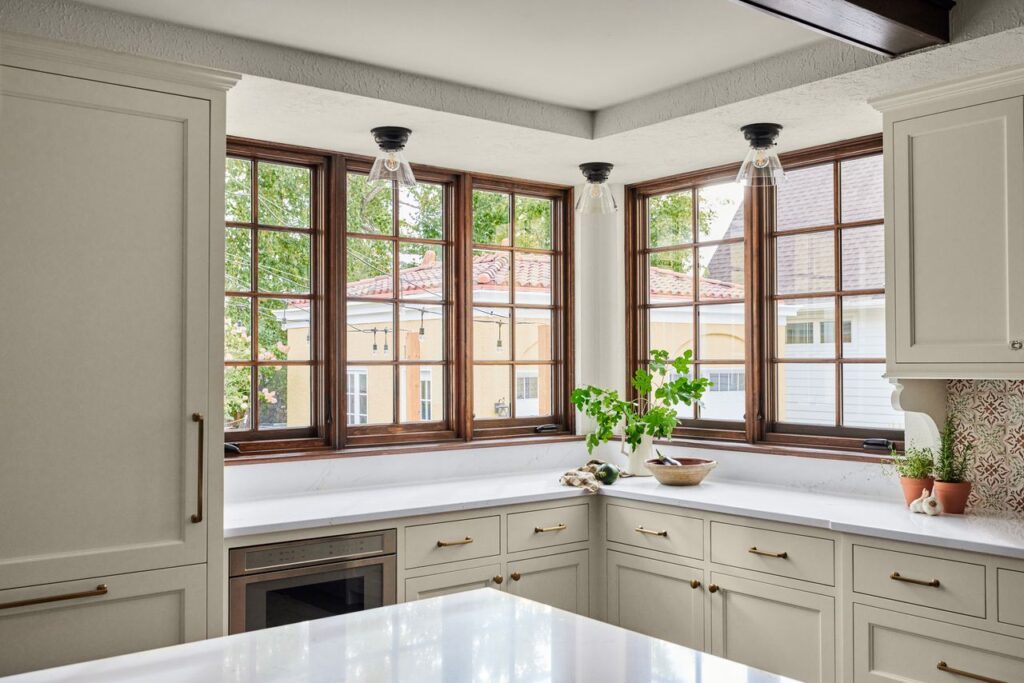
Casement windows are the style most closely tied to Tudor architecture. Hinged at the side and opening outward, they echo the way windows were built in historic European homes. The tall, narrow proportions fit naturally with the vertical lines of a Tudor façade, especially when several windows are grouped across the exterior.
Because of their proportions, casement windows naturally fit the structure of many Tudor homes. When paired with divided grilles and darker frames, they recreate the classic look while still providing the airflow and energy performance expected from modern windows.
Bay Windows
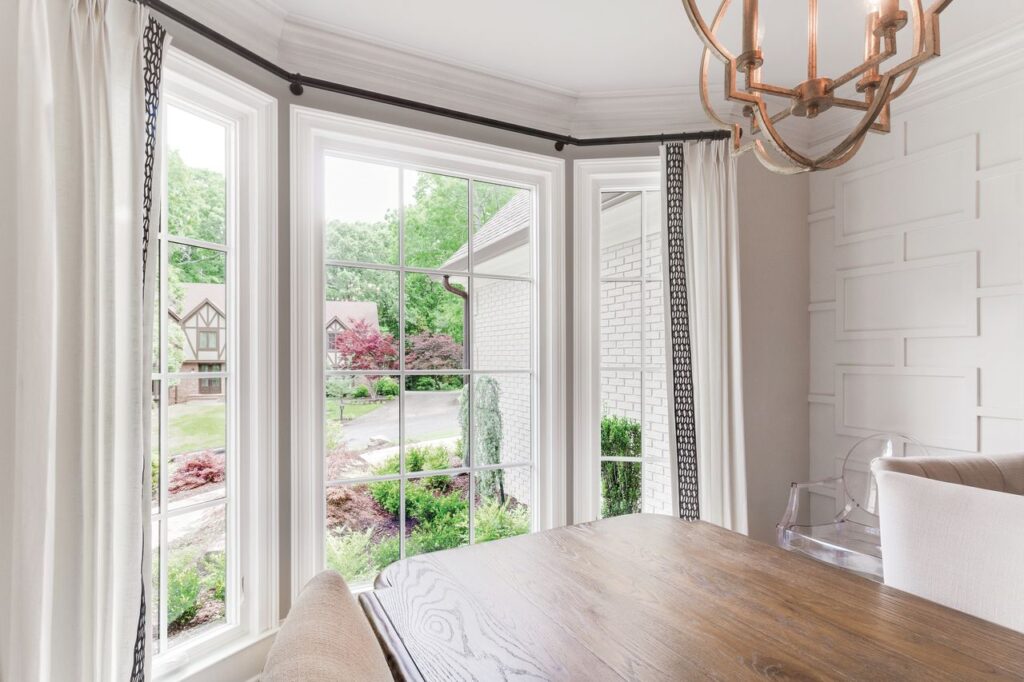
Bay windows are often one of the most eye-catching features on the front of Tudor Revival homes. Because the window extends outward from the wall, it introduces depth and breaks up the flat surface of the façade.
Inside the home, the angled glass lets light in from several directions, brightening living rooms or dining areas that might otherwise feel enclosed. A well-designed set of bay windows fits naturally with Tudor architecture because the projecting shape complements the style’s defining asymmetry.
Double Hung Windows
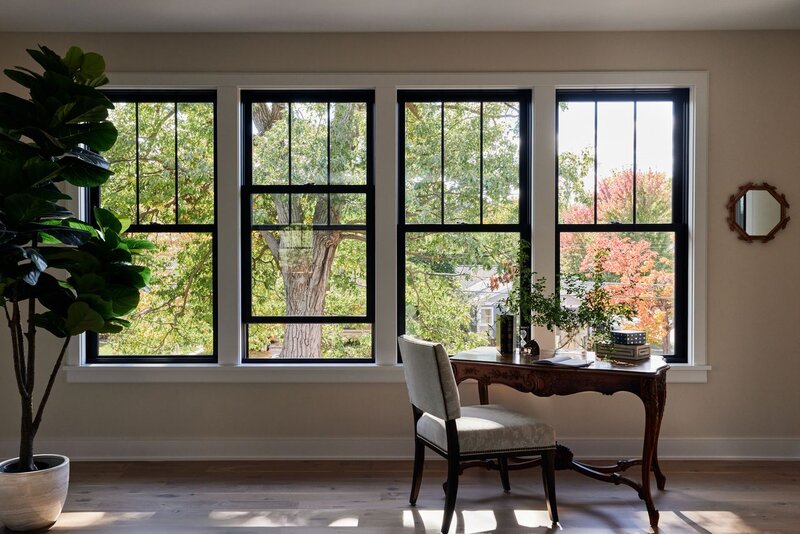
Double hung windows were not part of the earliest Tudor homes, but they appear regularly in Tudor Revival architecture. Their simple design and familiar operation make them easy to incorporate into many different home styles.
The two vertically sliding sashes allow flexible ventilation and straightforward cleaning. When finished with darker frames and traditional grille patterns, double hung windows sit comfortably alongside other Tudor window styles without feeling out of place.
Transom Windows
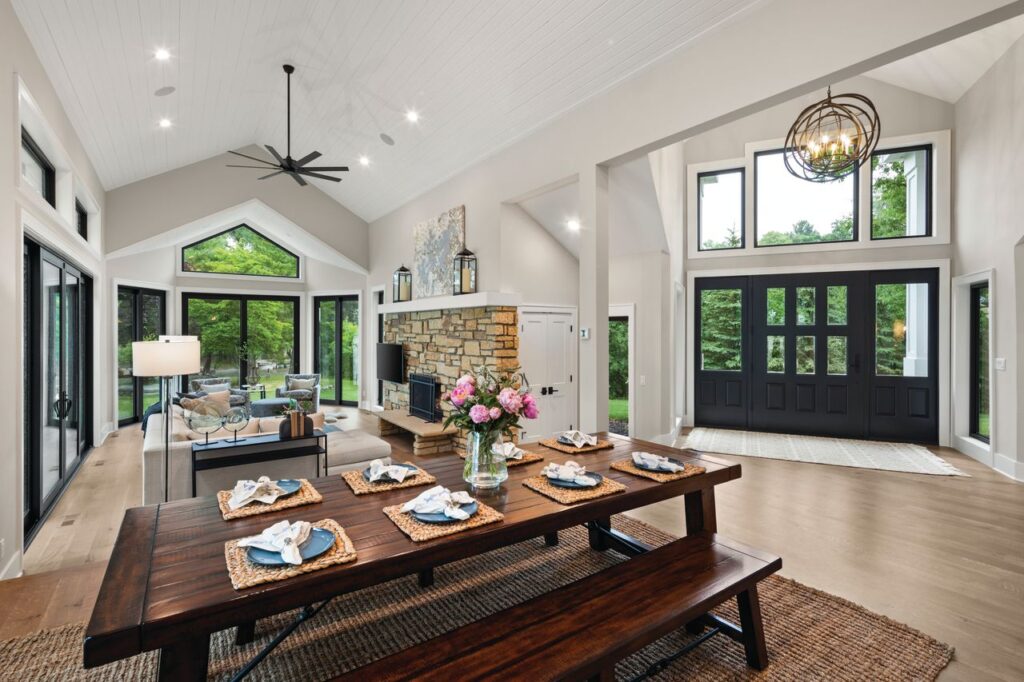
Transom windows are smaller windows installed above doors or larger window groupings. On Tudor homes, they often appear above entryways or above sets of casement windows, where they bring in additional light without changing the overall window proportions.
These smaller windows add a bit of extra character above the main windows, letting in more light without changing the overall look of the façade.
Tudor Window Grille Patterns: Traditional vs Modern
Grille patterns are one of the details that make Tudor-style windows instantly recognizable. The grille layout shapes the overall character of the window, which is why this decision matters as much as choosing the window style itself.
Historically, Tudor windows used small panes of glass joined together with lead strips, creating the diamond patterns often associated with the style. Modern Tudor windows recreate this look using decorative grille systems that maintain the visual design while improving energy performance.
Today, most Tudor homes fall into one of three grille styles:
| Grille Pattern | Look | Best For | Pane Count |
|---|---|---|---|
| Diamond (Leaded) | Historic, ornate | Traditional Tudor homes | 6–8+ panes per sash |
| Colonial | Clean, balanced | Modern Tudor Revival homes | 4–6 panes per sash |
| No Grille | Minimal, contemporary | Modern Tudor interpretations | N/A |
Diamond grilles remain the most recognizable Tudor pattern because the diagonal lines mirror historic leaded glass. Colonial grilles offer a simpler layout that still feels traditional, which is why they appear frequently on Tudor Revival homes. Some modern Tudor homes skip grilles altogether and rely on dark frames and larger glass panes for contrast.
You may also see the terms true divided lites (TDL) and simulated divided lites (SDL). TDL windows use separate panes of glass, while SDL windows apply decorative grilles over a single insulated glass unit. SDL designs are far more common today because they provide the traditional appearance with better energy efficiency.
Frame Materials for Tudor Windows
Tudor homes often balance historical authenticity with modern durability, and the window frame material you choose will influence both appearance and maintenance.
- Wood remains the most traditional choice. It offers rich texture and can be stained in darker tones that match Tudor architecture, though it is not recommended in the Midwest, where climates cause natural warping and expansion.
- Clad-Wood windows combine a wood interior with a protective aluminum or fiberglass exterior. This approach preserves the classic interior look while reducing exterior maintenance.
- Fiberglass provides strong durability and low maintenance while closely resembling painted wood. It also performs the best in changing weather conditions.
- Vinyl is typically the most affordable option. With the right color and grille pattern, it can work on Tudor homes, though it often lacks the depth and texture of wood or fiberglass.
Many Tudor-style projects incorporate Marvin Windows because their wood and fiberglass designs make an ideal match with traditional architectural styles.
Color Choices for Tudor Windows
Color has a major influence on whether a window looks authentic on a Tudor home. The style traditionally relies on contrast between darker window frames and lighter exterior walls.
Classic Tudor-style windows often use deep wood tones such as walnut, dark brown, or reddish-brown finishes. These colors complement brick, stucco, and exposed timber framing.
Modern Tudor windows have introduced another popular option: matte-black window frames. Black creates a strong contrast against light stucco or stone and gives the home a slightly updated look while still feeling traditional.
In most cases, keeping the frame, sash, and trim in the same color helps the window read as a single architectural element. Light colors, such as bright white or beige, can reduce the contrast that gives Tudor homes their distinctive appearance.
How to Choose Tudor Style Windows: A Simple Framework
If you are replacing windows on a Tudor home, the new ones should feel like they belong to the house and work naturally with the architecture.
Here’s how to choose new Tudor-style windows during your window replacement project:
- Identify Your Tudor Style: Some homes closely follow historic Tudor architecture, while others fall into the Tudor Revival category. Traditional homes often feature diamond grilles and wood frames, while modern Tudor designs may include larger glass areas and simpler grille patterns.
- Choose the Right Window Style: Casement windows are the most traditional option, especially when installed in pairs or small groupings. Bay windows often appear on front façades, while double hung windows offer a practical alternative that still fits comfortably within the style.
- Pick a Grille Pattern: Diamond grilles create the classic Tudor look, with crisscrossing lines that resemble historic leaded glass. Colonial grilles offer a cleaner pattern that still feels traditional, while some modern Tudor homes rely on larger panes and darker frames instead of decorative grids.
- Select a Frame Material: Wood and clad-wood frames typically look the most authentic on Tudor homes. Fiberglass offers durability with an appearance similar to painted wood, while vinyl tends to be the most affordable option.
- Choose A Dark, Cohesive Color: Deep browns, walnut tones, and matte black frames are common choices because they contrast well with stucco, brick, and timber framing.
- Look For Energy Efficiency: Modern Tudor windows can still deliver strong performance. Features such as Low-E glass and Energy Star certification help improve insulation while preserving the traditional design.
Once you’ve begun narrowing down your choices, NEXT Door & Window can simplify the process by reviewing your options with you in person. Schedule a free, in-home assessment or virtual consultation today.
Modern Tudor Windows: Updating the Look Without Losing the Character
Tudor architecture has seen a resurgence in recent years, and many homeowners are refreshing the style with a slightly more contemporary approach. The goal is usually to preserve the recognizable elements of Tudor design while allowing for brighter interiors and cleaner window lines.
This shift has led to growing interest in modern Tudor windows, which often feature black frames and larger glass panes while still maintaining the vertical proportions that define the style. The darker frames keep the classic contrast that Tudor homes are known for, while the larger glass areas allow more natural light inside.
Simulated divided lites have also made it easier to recreate historic grille patterns without sacrificing energy performance. Because Tudor homes are naturally asymmetrical, mixing window types such as casement and picture windows can still feel appropriate as long as the overall proportions remain balanced.
FAQ: Tudor Style Windows
What makes a window look Tudor?
Tudor windows are usually tall and narrow with divided panes of glass. Diamond grille patterns are the most recognizable feature, though colonial grille layouts also appear on Tudor Revival homes. Dark window frames and grouped window arrangements help reinforce the traditional look.
What type of windows do Tudor houses have?
Casement windows are the style most commonly associated with Tudor architecture. Bay windows and transom windows also appear frequently, and many Tudor Revival homes include double hung windows because they are practical while still fitting the overall design.
Can I put modern windows on a Tudor home?
Yes. Modern windows can fit a Tudor home when the proportions and design details match the architecture. Choosing darker frame colors, divided grille patterns, and vertically oriented windows helps maintain the character of the house.
What is the best frame material for Tudor windows?
Wood and clad-wood frames offer a traditional look associated with Tudor architecture. However, they are prone to natural warping and expansion in Midwest climates. Fiberglass works well because it offers durability and energy efficiency while resembling painted wood.
Are Tudor windows energy efficient?
Yes, modern Tudor windows feature insulated glass, Low-E coatings, and Energy Star-certified product lines to improve insulation while preserving the traditional window appearance.
What color should Tudor windows be?
Tudor-style windows are typically darker in color. Deep browns, walnut tones, and matte black frames are common choices because they contrast well with light stucco or brick exteriors and reinforce the traditional architectural style.
