
Are you noticing a “sweat” building up on your windows? This sweat is called condensation. Condensation normally occurs inside the home when it’s extremely cold outside but too humid inside. It can also be a clear indicator that there is seal failure and new glass or windows will be needed.
When warm air mixes with cool air, condensation forms. It’s similar to how your bathroom mirror fogs up when you take a hot shower. To avoid this condensation on your windows, it’s best to reduce the humidity levels indoors. Turn down the humidifier on very cold days. We’ll share more tips below.
But what if you have windows that are experiencing too much moisture or condensation? That could mean that they are failing in protecting you from the elements, the windows are old, and the seals are ineffective.
Either way, we’ll share all the ways you can decipher when condensation has become a problem and things you can do to minimize the occurrence in your home.
NORMAL WINDOW CONDENSATION
The greater the extremes between outdoor and indoor temperatures, the more likely condensation will become visible on your windows. So thanks to our Midwest winters and severe summers, this is a common problem that many homeowners have to deal with.
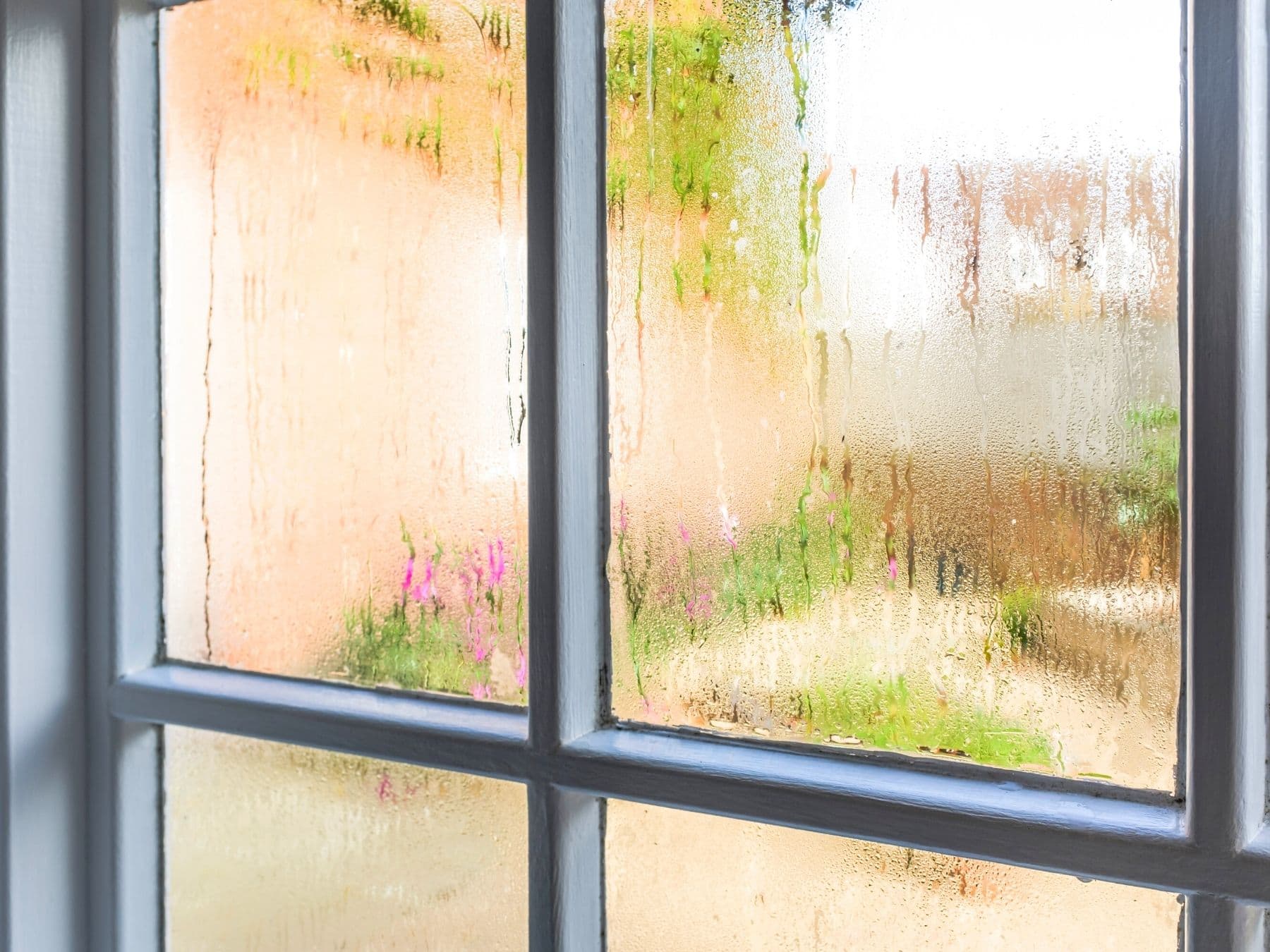
There are 2 types of condensation: interior and exterior. As mentioned, interior condensation is most often caused by extremely cold outside temps and excess moisture present inside the home. As the outside temp drops, the inside surface will also get cooler; therefore, condensation will form.
Some everyday things that can cause the temperature imbalance that brings on condensation:
- Cooking
- Showering
- Dishwashers
- Pets
- Plants
- A clothes dryer that isn’t vented properly
- Large groups gathered indoors
If you have brand new windows and notice more condensation than when you had older windows that are most likely happening because of the airtight seal. Less air is entering your home from the outside compared to the air leaking from older windows that dissolved the moisture before it could collect. You want airtight seals; you want windows to do their job. By following a few simple steps (listed below), you can minimize the condensation problem.
Moving on to exterior condensation, this “sweat” forms on the outside pane of the window and typically occurs in the summer. This can happen for many exterior reasons but is not of concern. Exterior condensation usually disappears quickly and doesn’t affect the interior of your home.

ABNORMAL WINDOW CONDENSATION
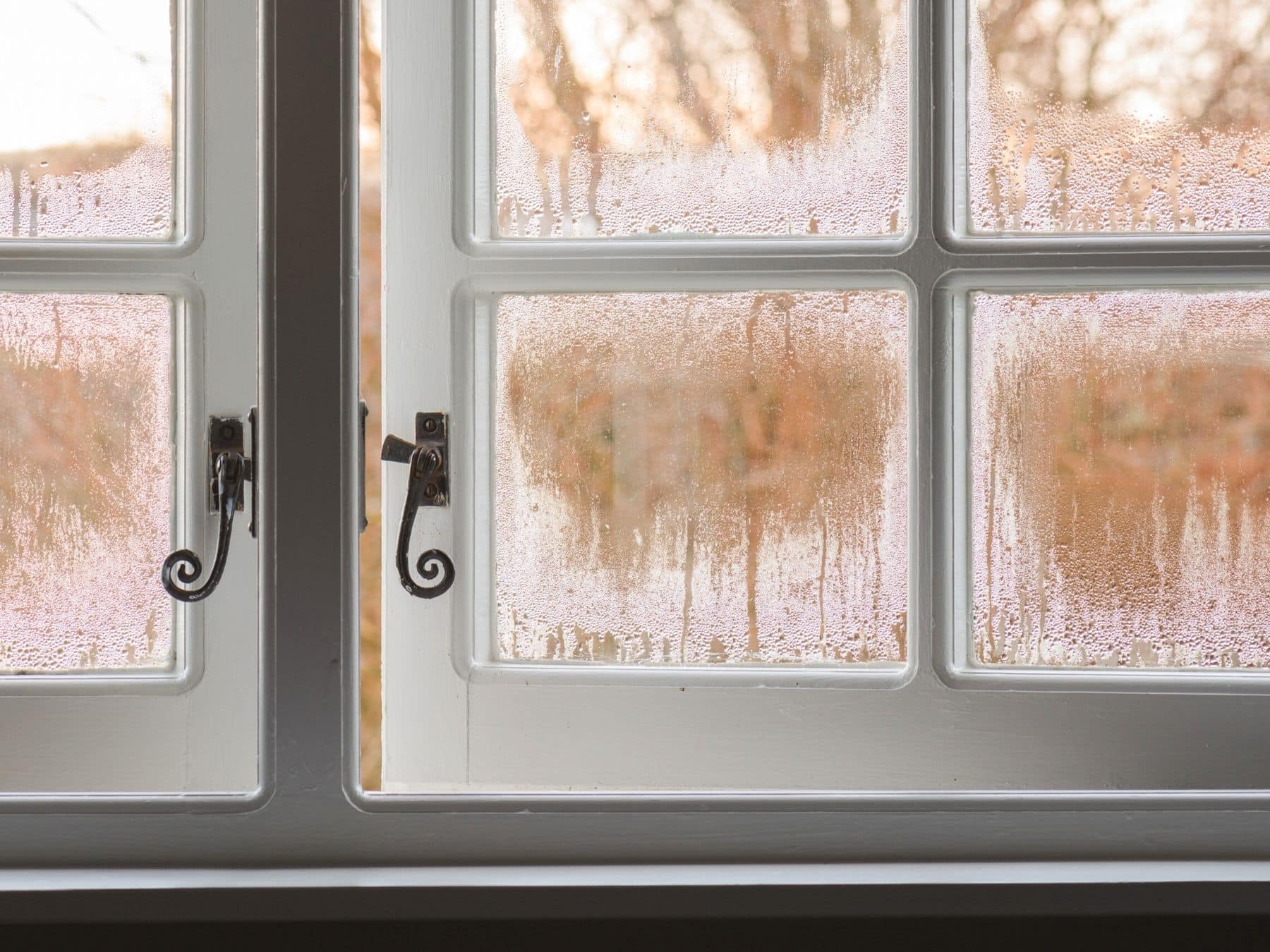
What if the condensation doesn’t budge? It could be a sign of seal failure on old and drafty windows. With an ineffective seal, it’s easy for moisture to find its way between the glass panes, forming condensation.
Too much condensation may lead to peeling paint and mold or mildew growth, which may result in various health problems. It may also cause window frames and other wood components to rot.
To prevent this type of issue, we recommend investing in new energy-efficient windows. Windows with broken seals will no longer be able to provide the level of insulation necessary to keep the home comfortable, energy-efficient, and condensation-free.
TIPS TO REDUCE WINDOW CONDENSATION
Here are some tips to reduce the risk of condensation forming on your windows:
- Reduce moisture sources. Turn down the humidifier based on the outdoor weather.
- Keep your home ventilated by opening your windows to allow air to circulate. Investing in a ventilation system can also help.
- Keep the indoor temperature at a constant level, especially during winter. Having variable room temperature gives space for warmer air. This can release moisture into the indoor atmosphere.
- Limit plants or keep them all in one room and avoid overwatering.
- When air drying laundry, open some windows so that moisture can escape.
- Open windows for a few minutes each day, especially after steam-producing activities.
- Open blinds and drapes. Heavy window treatments can restrict the flow of air against the windows.
- As for the placement and positioning of your furniture, add small spaces in between fixtures and walls. This gives room for air to circulate and not accumulate in one spot.
If these tips don’t improve the condensation problem, then it is best to consult with one of our Design and Energy experts. Depending on the issues found you might need to either repair or replace your windows. Condensation can be a serious problem. If there’s too much condensation on your windows, don’t wait until problems occur before you have your windows checked. Contact us today; we are here to help you with your window concerns.
PIN FOR LATER